This time last year, I watched Rahul Sengottuvelu demo a janky Gmail client with an LLM as the backend and a UI generated on the fly in his AIE talk. "Rethink how you scaffold agents" was the pitch.
Rethinking how we Scaffold AI Agents - Rahul Sengottuvelu, Ramp
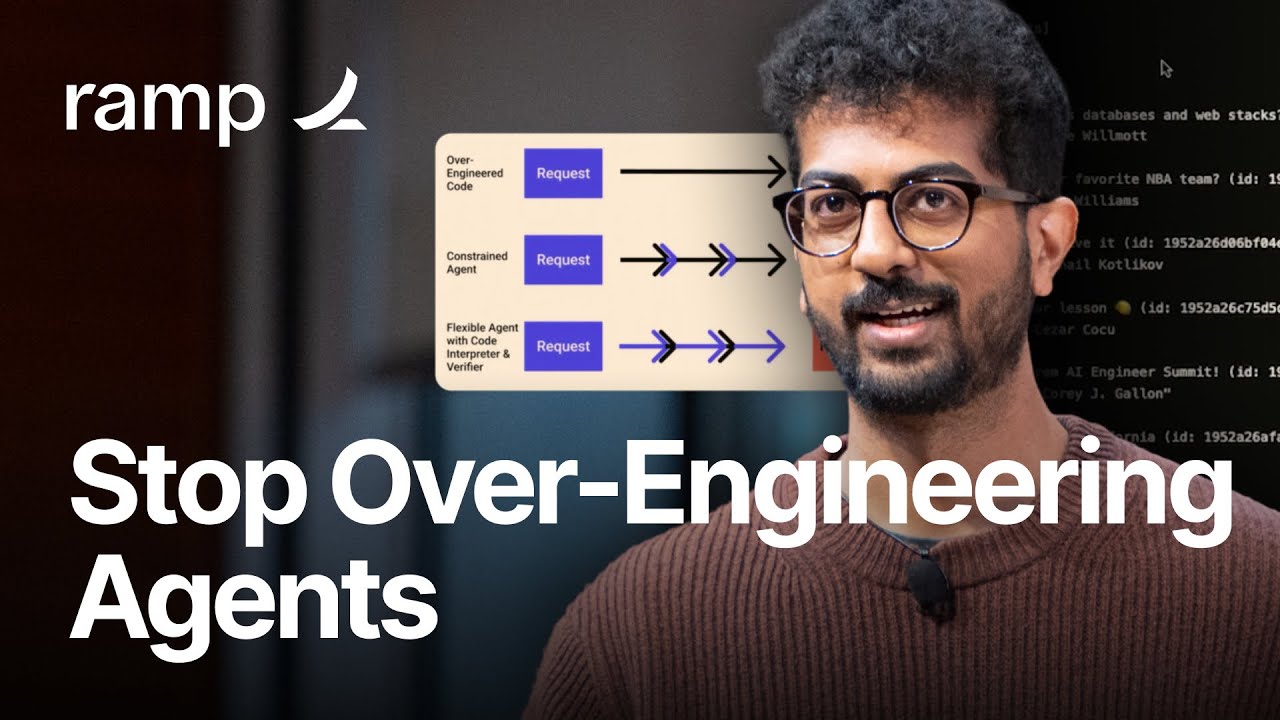
Systems that scale with compute, beat systems that don't.
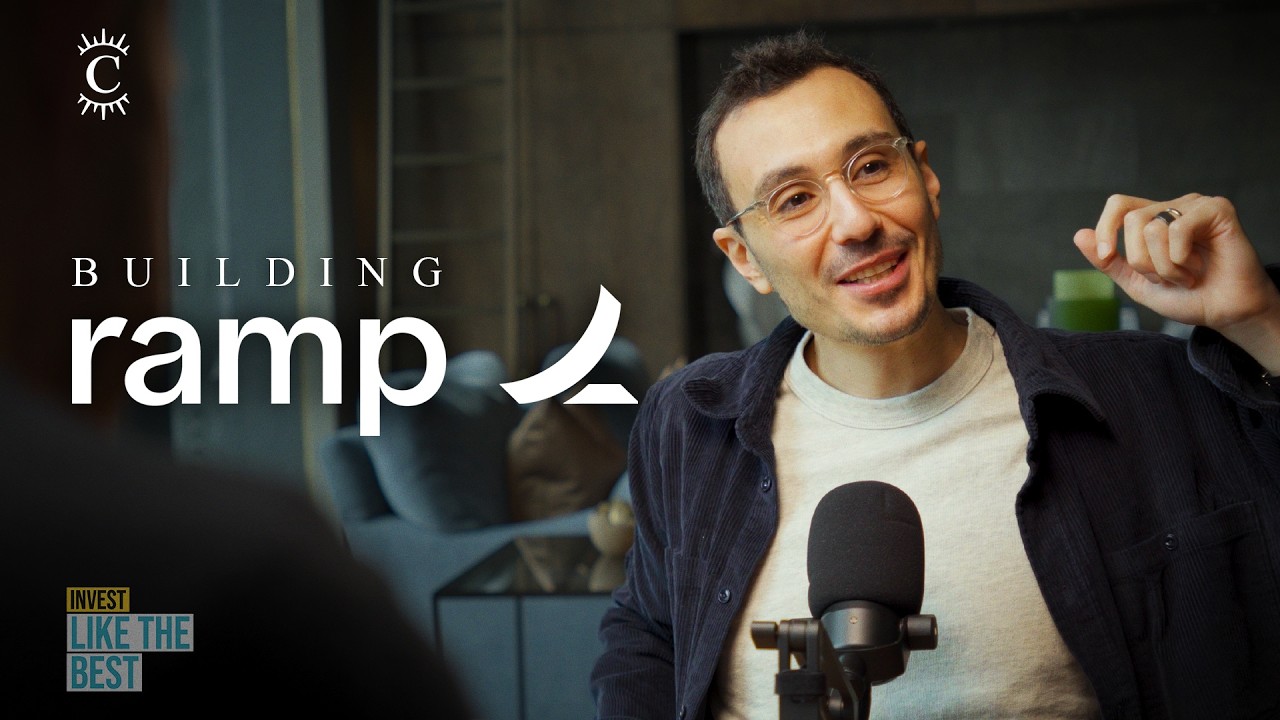
Six months later, in this interview, Karim Atiyeh, co-founder and CTO of Ramp, said the following:
The next phase that we're entering .. is one where you start thinking about these LLMs really as part of your product. Your code is the LLM plus instructions and an infinite loop.
The Anatomy of Ramp's Hyper-Growth | Karim Atiyeh Interview
A year ago (even six months ago) feels like an eternity. At that time, these ideas weren't as compelling as they are now.
Today, Rahul still leads applied AI at Ramp, and it's safe to say that doubling down on those ideas has paid dividends. Ramp is doing over $1B in annualised revenue, with a $32B valuation (up from $13B in 2025). Its Spring 2026 report tracks more than $100B in anonymised transactions across 50,000 companies.
Ramp is in an interesting position.
They are building agents into their internal engineering, operations, products and services, and more of their customers are trending in the same direction.
Since January 2025, average monthly AI token spend across Ramp customers has increased 13x. Read that again. Not 13%. Thirteen times.
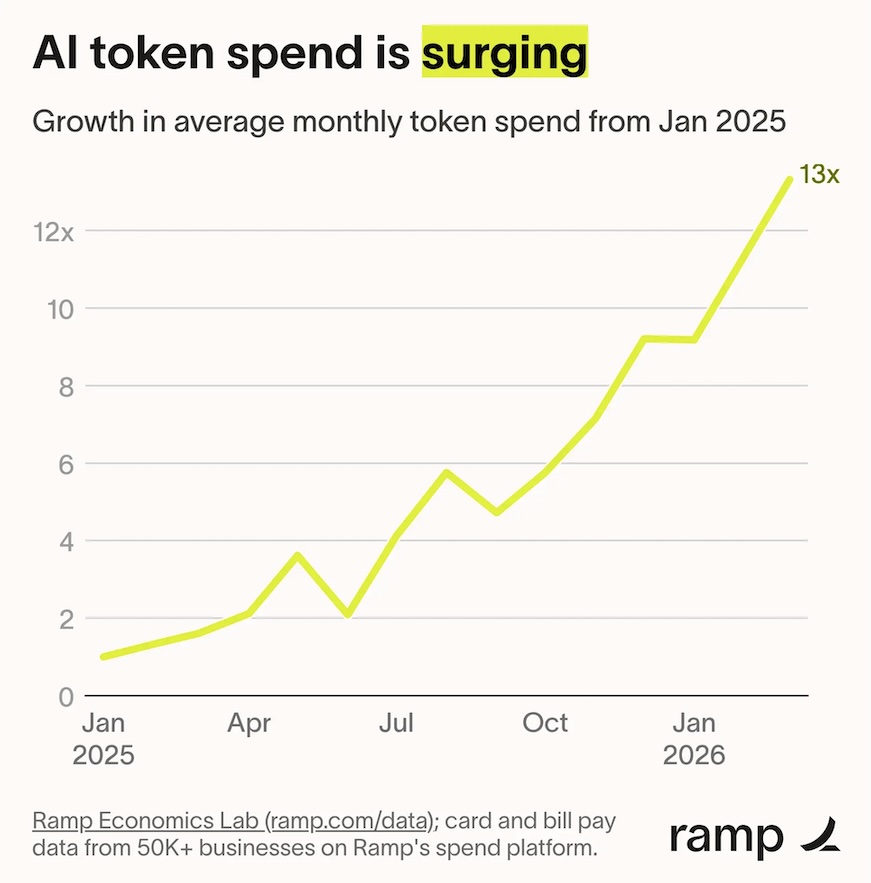
In a world where companies are burning billions of tokens per month and more core services involve deploying agents, entities like Ramp will start looking less like traditional software and more like agent-labs. They will move further down the stack, doing more foundational research and experimentation with the underlying models.
The inverse is also true.
Foundation model providers will continue moving in the opposite direction, back up the stack, serving consumers directly, experimenting, and collecting revenue from their products.
More about the agent lab thesis here: Agent Labs: Welcome to GPT Wrapper Summer - by swyx (Shawn)
Ramp Labs: moving further down the stack
Ramp is an AI-native financial services platform. They streamline and automate expense management, billing and accounting. They even do a card. The Best Corporate Card | Ramp
Late last year, they launched Ramp Labs.
Here is some of that research.
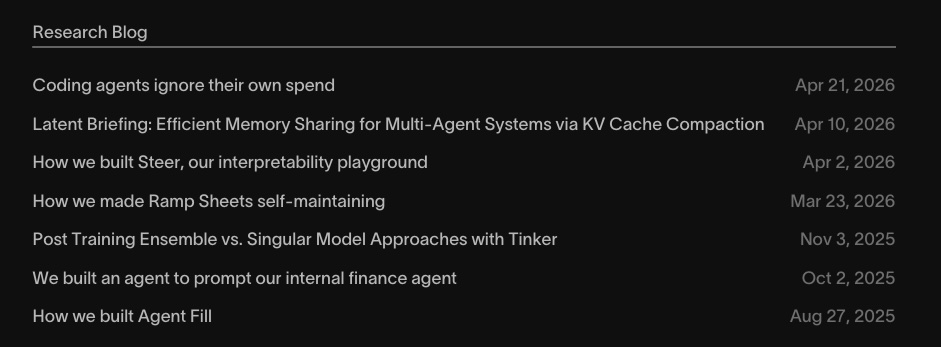
While these aren't peer-reviewed or published on arXiv (they're published directly on X), they're clearly on par with the best applied systems academic research and, in some ways, more relevant given Ramp's position and customer base.
So why is this research so interesting?
There are many examples of great tech companies doing applied research at the edge of their product domain.
Google is the obvious full-stack example: ranking, retrieval, and recommendation. Netflix expanded on this. Uber and Airbnb innovated with pricing, matching, and marketplace dynamics. Stripe has done a heap of great work understanding, mapping, and building developer infrastructure for internet commerce.
Stripe Radar | Payment and Credit Card Fraud Detection
This work is really about deeply understanding the systems beneath the products and features. It makes for better products and a stronger company reputation, but it also pushes entire industries and technologies forward.
Ramp Labs is an example of something different.
As more companies like Ramp start looking more like 'agent labs', where the agent becomes the product, they will increasingly operate further down the stack, blurring the lines between foundational model research and product development.
At first glance, KV cache optimization for agentic memory and activation steering (which is closely related to interpretability work) might not seem within scope for a financial services company. But in a world where more companies are deploying agents and burning billions of tokens, it makes sense.
Latent Briefing: Efficient Memory Sharing for Multi-Agent Systems via KV Cache Compaction
If a company's major expense is tokens, then agent architecture (harness-engineering), model selection, evaluation - all these things are crucial if you're a serious 'agent-lab'. Experimenting and innovating at this layer enables Ramp to make their own company more efficient. But it also helps them better understand and build for their own customers.
Labs do product, products do labs
It's still hard to predict how this plays out.
This week, OpenAI announced ChatGPT for clinicians. ChatGPT for Clinicians
Last week Anthropic announced Claude Design. Introducing Claude Design by Anthropic Labs
The labs are building products, and the product companies are building labs.
Ultimately, I think it's good for product companies to do faster, less formal, more product-driven experimentation and research deeper in the stack, while labs build products that push and inspire companies (agent labs) to build better, more curated services for consumers.
It's a great public service when a company like Ramp does this research and shares it publicly.
References
- Rahul Sengottuvelu: Rethinking how we Scaffold AI Agents.
- Karim Atiyeh: The Anatomy of Ramp’s Hyper-Growth.
- Ramp: The trillion-dollar blindspot you’re missing.
- swyx: Agent Labs, Welcome to GPT Wrapper Summer.
- Ramp Labs: Latent Briefing.
- OpenAI: ChatGPT for clinicians.
- Anthropic: introducing Claude Design.